A roundtable on National AI Policy 2025: Opportunities and Challenges
Riphah Institute of Systems Engineering
Riphah International University
Islamabad 28th August 2025 10:30 AM –To-12:30 PM
Get Complete ReportIntroduction
The Federal Cabinet of Pakistan, led by Prime Minister Shehbaz Sharif, has approved the National Artificial Intelligence (AI) Policy 2025—a comprehensive framework to establish an AI ecosystem that will democratize access to AI technologies, improve public services, stimulate innovation, and generate economic growth. The policy sets ambitious targets, including training 1 million AI professionals by 2030, launching 50,000 AI-driven civic projects, developing 1,000 local AI products, and creating funds to support research, startups, and private sector involvement.
The National AI Policy 2025 brings many opportunities for Pakistan to grow in technology and the economy. It focuses on training young people through AI education, scholarships, and skills so they can build startups, support industries, and compete worldwide. The policy also aims to improve public services with AI, make governance more transparent, and encourage research and innovation through funding and infrastructure. At the same time, it highlights the importance of inclusivity, ensuring that women and persons with disabilities are part of this journey, and positions Pakistan to connect with global AI standards and attract investment. However, there are also challenges. Pakistan still lacks strong infrastructure like high-performance computing and data storage, and there are not enough trained AI teachers and experts. Issues of data protection, AI ethics, and cybersecurity risks also need urgent attention. Long-term funding must be secured, and industries that resist new technologies must be encouraged to adapt. Overcoming these challenges will be key to making the most of AI’s potential for Pakistan.
Purpose of the Discussion
This round table will bring together government officials, academia, industry leaders, and civil society to analyze the opportunities and challenges of the National AI Policy 2025, and to recommend actionable strategies for effective and inclusive implementation.
Expected Outcomes
- Shared understanding of the policy’s potential benefits and risks.
- Identification of priority sectors for early AI adoption.
- Recommendations for closing skill and infrastructure gaps.
- Roadmap for balancing innovation with regulation and ethics.
ROUNDTABLE HELD ON NATIONAL AI POLICY 2025: OPPORTUNITIES & CHALLENGES
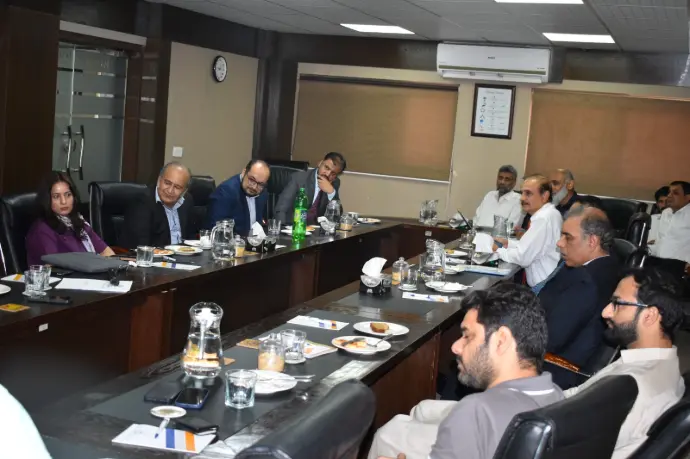
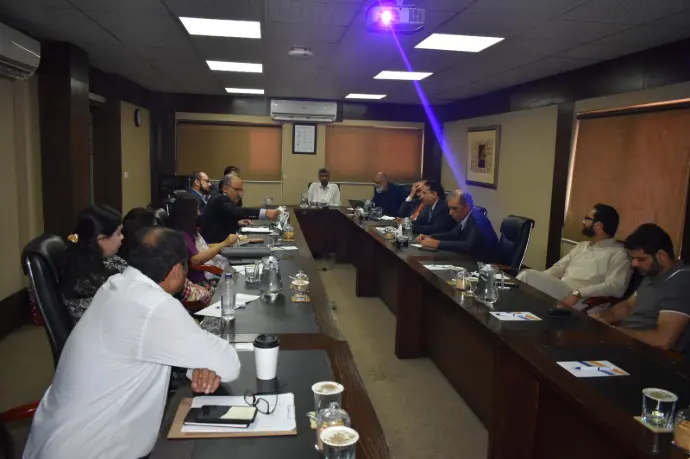
RISE successfully organized a Roundtable on “National AI Policy 2025: Opportunities & Challenges” on 29th August 2025 at Riphah International University, Islamabad. This initiative is a part of RISE’s broader commitment under the strategic vision of Riphah International University to foster research-driven national development. The session convened AI experts, government officials, academia, industry leaders, and civil society to explore how Pakistan can harness Artificial Intelligence (AI) for inclusive growth, innovation, and better governance. Roundtable key takeaway was "The policy outlines a commendable vision, its success depends on a long-term commitment to addressing these fundamental challenges rather than just setting aspirational goals".
Panelists
- Dr. Noor Fatima - Professor; International Islamic University Islamabad (IIUI)
- Dr. Nazir Malik - Rector Imperial College Lahore
- Dr. Muhammad Tanzeel Murtaza - Director; National Centre Physics Islamabad
- Dr. Shafaqat Munir - Deputy Executive Director; SDPI Islamabad
- Mr. Badar - Director; MySon Ptv Limited
- Dr. Zohaib Zafar - CEO; TechQuest.AI
- Dr. Mujeeb Afzal - Professor; Quaid-e-Azam University Islamabad
- Dr. Rana Fayyaz - Deputy Director; AI Center NCP Islamabad
- Dr. Rashid Aftab - Director; Riphah Institute of Public Policy Islamabad
Challenges
The policy's implementation faces major
hurdles rooted in systemic issues, including
a fragmented and inadequate digital and
physical infrastructure, a wide digital literacy
gap, a severe mismatch between academic
training and industry needs, and persistent
brain drain. The lack of policy continuity and
sufficient R&D funding, coupled with socio
cultural barriers and the risk of job
displacement, makes the policy's ambitious
targets for a skilled workforce and
widespread AI adoption difficult to achieve
in a short timeframe.